GET A REAL NUMBER.
Tell us the aircraft, the field and the condition. We come back with a firm scope and a firm price before anything starts.
Owner Guide
Most aircraft detailing falls between $350 and $6,500 per visit. Where a specific aircraft lands inside that range depends on size first, condition second, and scope third.
Updated August 2026 · Tarmac Detail Company, Livermore (KLVK)
Nobody in this industry publishes prices, which is why the question gets asked constantly and answered rarely. Here is a straight breakdown of what the work costs and what actually drives the number, using the ranges we see across the Bay Area and Central Valley market in 2026.
Light single (Cessna 172, Cherokee, Bonanza): an exterior wash typically runs $300 to $600. A full detail with interior runs $500 to $1,000. Correction-grade work with machine polish runs $900 to $1,800.
Light twin and high performance single: expect roughly 25 to 50 percent above the light single figures, because surface area, gear complexity and belly work all scale up.
Turboprop and light jet (King Air, Baron, Learjet 31, Navajo): wash $900 to $1,600. Full detail with degrease and interior $1,500 to $2,900. Correction grade $2,500 to $4,500.
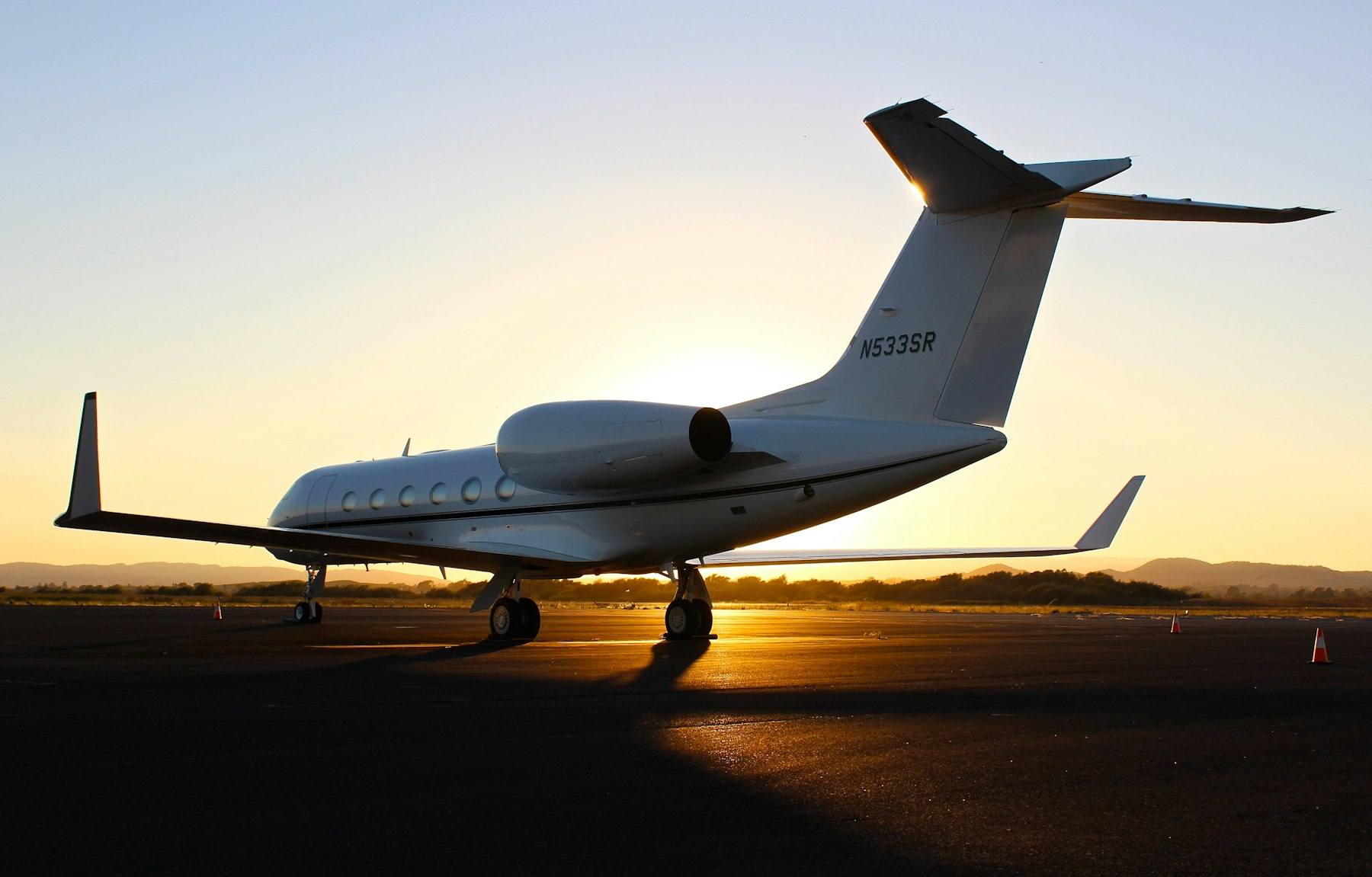
Midsize and large jet (Gulfstream, Citation X, Challenger): wash $2,000 to $3,500. Full detail $3,500 to $6,000. Correction grade $6,000 and up.
Ceramic coating, applied over corrected paint, generally runs $1,200 to $2,200 on a light single, $3,000 to $4,500 on a turboprop, and $6,000 and up on a jet, depending on coating durability and paint prep required.
These are market ranges, not a price list. Every aircraft is quoted after we know what condition it is in.
Wetted area, not weight. Detailing cost tracks how much surface has to be touched. A long-wing turboprop takes more hours than a heavier but more compact airframe. That is why quotes go by size class rather than by gross weight alone.
Condition, which is the big variable. Two identical airframes can differ by a factor of three. An aircraft washed every six weeks is a straightforward job. The same aircraft after eight years on a tie-down with baked exhaust staining, etched bird damage and chalked paint is a correction job, and correction is hours of machine work.
Scope. Wash only, wash plus degrease, full interior, correction, coating. Each step adds real labor. The gap between a wash and a correction-grade detail on the same airframe is usually three to five times.
Belly and gear. Degreasing the belly, gear, wheel wells and brakes is the least pleasant and most time-consuming part of any exterior job. It is also the part with actual maintenance value, because a clean belly is a belly where your mechanic can see cracks, leaks and corrosion.
Where the aircraft is. Mobile detailing at your hangar removes the ferry flight, the hangar rental and the day of lost availability. Against a shop rate that looks lower on paper, mobile usually wins on total cost once you price an hour of turbine time.
Turnaround. Work booked inside 72 hours normally carries a rush fee, because it displaces other scheduled aircraft.
An hourly rate with no scope is not a quote, it is an open tab. Aircraft detailing has enough variability that an unscoped hourly arrangement almost always ends higher than expected. Ask for a firm scope and a firm number before the work starts, and get it in writing. We quote that way as a rule.
The two most common ways owners spend money they did not need to spend: dry-wiping dust off the airplane, which puts swirl marks straight into the paint, and hiring a car detailer who uses car products and car technique on an airframe. Ammonia glass cleaner on an acrylic windscreen causes permanent crazing. Aggressive rotary work at a rivet line burns through thin aircraft paint at the high point. Alkaline degreaser left on bare aluminum does its own damage. None of that is theoretical, and all of it costs more to fix than the original job saved.
A full repaint on a light single runs well into five figures and on a turbine aircraft considerably more. Detailing does not stop paint reaching end of life, but it materially extends how long that takes, particularly on aircraft that live outside. On the resale side, paint and interior condition are the two things a buyer reacts to first, and both are cheap to improve relative to the difference they make in an offer.
Tell us the type, the home field, roughly how it has been stored and cared for, and what you want out of it. Photos help but are not required. We come back with a firm scope and a firm price before any work starts. See packages by aircraft size, or request a quote.
Common Questions
An exterior wash on a 172 typically runs $300 to $600, a full detail with interior $500 to $1,000, and correction-grade work with machine polish $900 to $1,800. Condition is the main variable: an aircraft that has been washed regularly costs meaningfully less than one that has sat outside for years.
A wash on a midsize or large business jet generally runs $2,000 to $3,500, a full detail $3,500 to $6,000, and correction-grade work $6,000 and up. Light jets and turboprops sit lower, usually $900 to $2,900 depending on scope.
Typically $1,200 to $2,200 on a light single, $3,000 to $4,500 on a turboprop, and $6,000 and up on a jet. The range depends on coating durability and how much paint correction the aircraft needs first, since coating over oxidized paint locks the oxidation in.
The hourly figure can look higher, but the total is usually lower once you count what a shop visit really costs: the ferry flight both ways, the fuel, the pilot time, and a day or more of the aircraft being unavailable. On turbine aircraft that gap is not close.
Because condition varies so much that a published number would be wrong for most aircraft. That is a fair reason for a firm quote and a poor reason to refuse to give ranges at all, which is why this page gives them.
More owner guides: what detailing costs, is ceramic coating worth it, how often to detail.
Tell us the aircraft, the field and the condition. We come back with a firm scope and a firm price before anything starts.