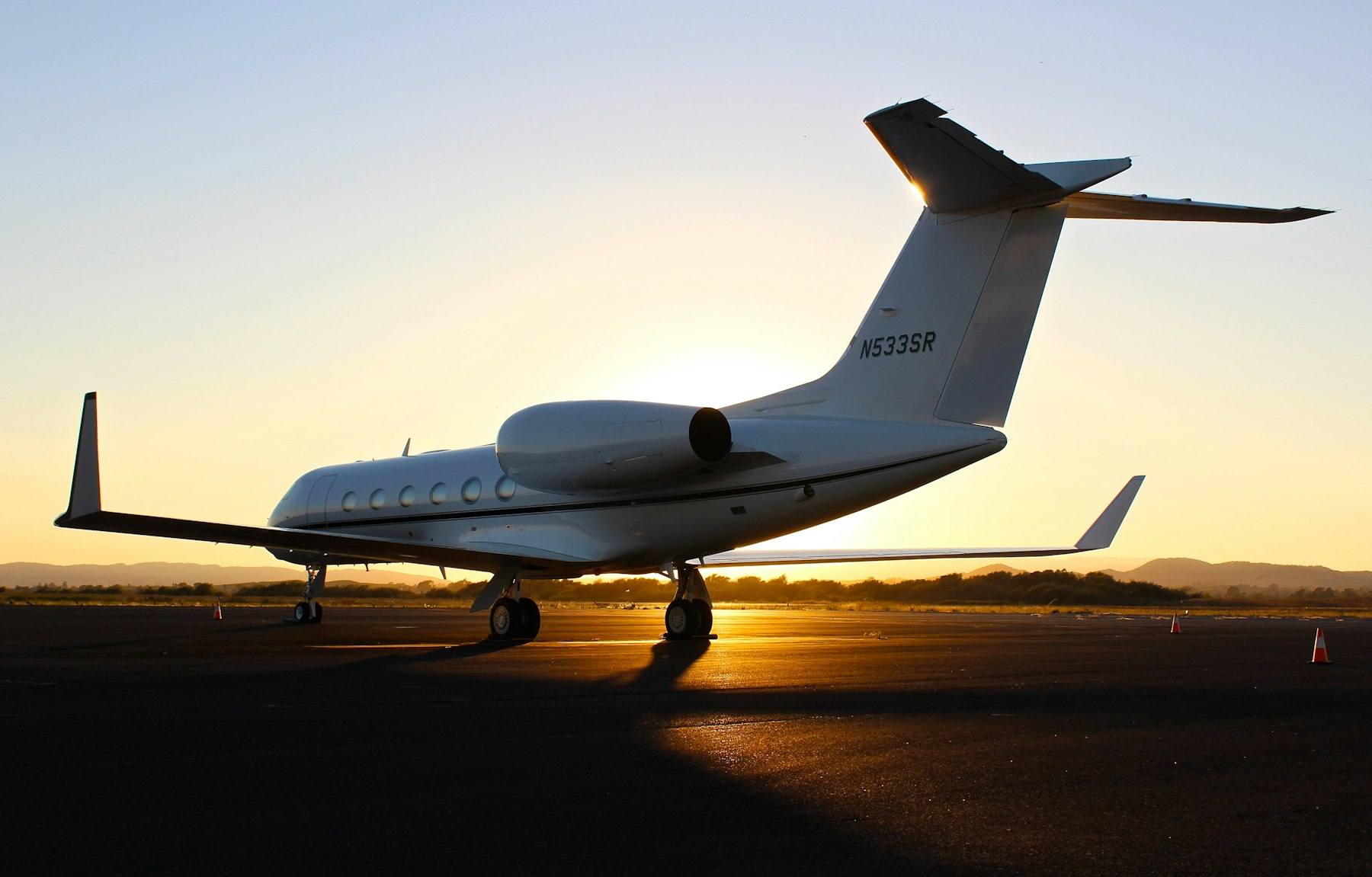
ASK BEFORE YOU BUY.
Send us the aircraft type, where it lives and how much it flies. We will tell you straight whether coating is worth it.
Owner Guide
For a high-utilization aircraft, an aircraft that lives outside, or a turbine aircraft with exhaust staining, usually yes. For a hangared aircraft flying under fifty hours a year, usually not.
Updated August 2026 · Tarmac Detail Company, Livermore (KLVK)
Ceramic coating gets sold with a lot of noise around it. Here is what it is, what it actually does, and the cases where the money makes sense.
A ceramic coating is a liquid silica polymer, usually described as SiO2, that cures into a hard, thin, semi-permanent layer chemically bonded to the paint. It is not a wax and it is not a sealant. Wax sits on top and lasts weeks. A sealant lasts months. A coating bonds and lasts years.
What that buys you is a surface that is harder, slicker and much less porous than bare paint. Contaminants have less to grip. UV reaches the paint through an extra barrier. Water beads and sheets off rather than sitting in place and drying into mineral spots.
This is where most of the disappointment comes from, so it is worth being blunt.
It does not fix bad paint. A coating is optically clear and follows the surface underneath. Coating over oxidized, swirled or etched paint locks those defects in for the life of the coating. Correction comes first or the coating is a waste.
It does not mean you stop washing. It means washing is faster and gentler, and that a lot of what used to require scrubbing now wipes off. It is not a self-cleaning airplane.
It is not corrosion protection. It is a barrier on painted surfaces. It does nothing for the interior of a lap joint, a control surface hinge, or anywhere salt actually gets in and does its damage. Bay Area aircraft still need salt off the airframe on a schedule.
It is not scratch proof. It resists light marring better than bare paint. It does not survive dry-wiping grit off a wing, and nothing does.
Turbine aircraft with exhaust staining. This is the strongest case by a wide margin. Exhaust soot down the aft fuselage is acidic, builds after every leg, and bonds to bare paint until it needs machine correction to remove. On a coated aircraft it wipes off. If your aircraft flies regularly and stains after every trip, the coating pays for itself in avoided correction alone.
Aircraft that live outside. A tie-down aircraft takes continuous UV, and UV is what kills clear coat and oxidizes single-stage paint. A coating is the most effective thing you can put between the sun and the paint. This is particularly true in the Central Valley, where the summer UV load at fields like Stockton is well above what a coastal aircraft sees.
High-utilization aircraft. Trainers, charter aircraft and anything flying several days a week accumulate contamination faster than the wash schedule can keep up with. A coating buys back time between washes and reduces how hard each wash has to be.
An aircraft you plan to keep. Over five years, correcting once and protecting is cheaper than letting paint degrade and dealing with it later. Over one year it is not. Coating is a long-hold decision.
Hangared aircraft flying under fifty hours a year. The paint is not under meaningful attack. A good sealant, renewed annually, gets you most of the benefit for a fraction of the cost.
Paint at end of life. If the aircraft is due for repaint inside two years, coat it after the repaint, not before.
An aircraft you are about to sell. A coating is a hard thing to charge a buyer for. Correction and a good detail move the offer. A coating mostly does not, because the buyer cannot see it.
Coating a light single generally runs $1,200 to $2,200 including the correction it needs first. A turboprop runs $3,000 to $4,500. A jet starts around $6,000. Against that, price what you would otherwise spend: a sealant application two or three times a year for the same period, plus the correction work the paint would need at the end of it. On a high-utilization or outdoor aircraft the coating usually comes out ahead over its lifespan. On a low-use hangared aircraft it usually does not. See our detailing cost guide for the wider picture.
Product claims are made under ideal conditions. In real service on an aircraft, plan on two years from a two-year product and three to five from a longer-life product, and expect the lower end of that if the aircraft lives outside in the sun. Coating life also depends heavily on how it is washed. Harsh chemicals, abrasive polish and wax applied on top all shorten it.
What correction is included before the coating goes on, and what happens if the paint needs more than expected. What the specific product is and its rated durability. How long the aircraft needs to stay dry and out of the air during cure. What the maintenance requirements are, because a coating washed with the wrong chemicals will not reach its rated life. And what happens if it fails early.
Read more about our process on the ceramic coating page, or ask us directly whether your specific aircraft is a candidate. We would rather tell you no than sell you a coating that will not earn its cost.
Common Questions
Yes. Aircraft-appropriate SiO2 coatings are applied to painted airframes the same way as on other vehicles, with the difference that aircraft paint is thinner and the prep has to be more conservative. Coating work needs hangar or covered space for application and cure.
In real service, plan on about two years from a two-year rated product and three to five years from a longer-life product. An aircraft that lives outside in strong sun sits at the lower end of the range. Wash chemistry matters too, since harsh cleaners shorten coating life.
No. It is a barrier on painted exterior surfaces. It does nothing inside lap joints, seams, hinges or fastener holes, which is where corrosion actually starts. Aircraft based near salt water still need regular washing to remove salt from the airframe.
Yes, but washing is easier and gentler. Contamination releases with much less effort and exhaust soot generally wipes off rather than needing to be worked at.
Yes, in almost every case. A coating is clear and does not hide anything. Any oxidation, swirl marks or etching present when the coating goes on is locked in for the life of the coating.
Usually not. The paint is not under much attack, and an annual sealant delivers most of the practical benefit for a fraction of the price. The case for coating gets strong when the aircraft lives outside, flies a lot, or is turbine powered.
More owner guides: what detailing costs, is ceramic coating worth it, how often to detail.
Send us the aircraft type, where it lives and how much it flies. We will tell you straight whether coating is worth it.